Animal Rights
The philosophical and legal framework holding that non-human animals are sentient beings deserving fundamental protections from exploitation, suffering, and killing, regardless of their utility to humans. Debate concerns the moral basis of species-based distinctions.
Arguments for and against
Moral status of sentient beings
The capacity to suffer — not intelligence, language, or species membership — is the morally relevant criterion for protection from harm. Since many animals demonstrably experience pain, fear, and distress, excluding them from moral consideration is arbitrary speciesism.
Moral status requires more than sentience: it involves the capacity for moral reasoning, reciprocal obligations, and participation in a moral community. Human rights reflect the unique moral complexity of persons in ways that cannot be straightforwardly extended to other species.
Animal use in research
Animal research has contributed to nearly every major medical advance of the past century. Where no alternative exists, the use of animals for research that relieves human suffering is a morally defensible practice governed by the principle of minimizing harm.
Animal models frequently fail to predict human responses due to biological differences, producing misleading results and delaying the development of more valid human-relevant research methods. Investment in organoids, microfluidics, and computer models would produce better science with less suffering.
Legal protections and welfare standards
Establishing legal standing for animals — allowing welfare organizations to bring legal action on their behalf — would provide enforceable protection against egregious cruelty that current welfare laws routinely fail to deliver through regulatory enforcement alone.
Extending legal rights to animals creates enormous practical and philosophical complexity. Different animals have radically different cognitive capacities; a rights framework applicable to great apes cannot meaningfully be extended to insects or fish without becoming incoherent.
Human-animal relationship and coexistence
Recognizing animal interests does not require eliminating all human-animal relationships. A framework emphasizing positive obligations — habitat protection, humane treatment, prohibition of gratuitous cruelty — can improve the moral quality of human-animal coexistence without absolutism.
Animal rights philosophy, taken seriously, would require the abolition of animal agriculture, medical research, zoos, and pet ownership — changes so radical they are practically and politically unachievable, rendering the framework more of a philosophical provocation than a policy guide.
What influencers say
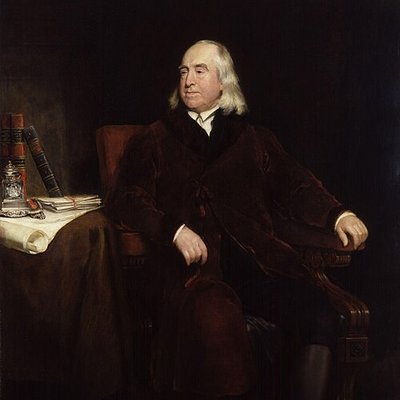
"The day has been, I grieve to say in many places it is not yet past, in which the greater part of the species, under the denomination of slaves, have been treated by the law exactly upon the same footing as, in England for example, the inferior races of animals are still. The day may come when the rest of the animal creation may acquire those rights which never could have been withholden from them but by the hand of tyranny. The French have already discovered that the blackness of the skin is no reason why a human being should be abandoned without redress to the caprice of a tormentor. It may one day come to be recognized that the number of legs, the villosity of the skin, or the termination of the os sacrum are reasons equally insufficient for abandoning a sensitive being to the same fate. What else is it that should trace the insuperable line? Is it the faculty of reason, or perhaps the faculty of discourse? But a full-grown horse or dog is beyond comparison a more rational, as well as a more conversable animal, than an infant of a day or a week or even a month, old. But suppose they were otherwise, what would it avail? The question is not Can they reason ?, nor Can they talk ?, but Can they suffer?"
"Create all the happiness you are able to create: remove all the misery you are able to remove. Every day will allow you to add something to the pleasure of others, or to diminish something of their pains . And for every grain of enjoyment you sow in the bosom of another, you shall find a harvest in your own bosom; while every sorrow which you pluck out from the thoughts and feelings of a fellow creature shall be replaced by beautiful peace and joy in the sanctuary of your soul ."

"Becoming a vegetarian is not merely a symbolic gesture. Nor is it an attempt to isolate oneself from the ugly realities of the world, to keep oneself pure and so without responsibility for the cruelty and carnage all around. Becoming a vegetarian is a highly practical and effective step one can take toward ending both the killing of nonhuman animals and the infliction of suffering upon them."
"Let us consider first the view that it is always wrong to take an innocent human life. We may call this the “sanctity of life” view. People who take this view oppose abortion and euthanasia. They do not usually, however, oppose the killing of nonhuman animals—so perhaps it would be more accurate to describe this view as the “sanctity of human life” view. The belief that human life, and only human life, is sacrosanct is a form of speciesism."

"But it is we that choose to divide animals up into discontinuous species. On the evolutionary view of life there must have been intermediates, even though, conveniently for our naming rituals, they are usually extinct."
"Let us try to teach generosity and altruism, because we are born selfish. Let us understand what our own selfish genes are up to, because we may then at least have a chance to upset their designs, something that no other species has ever aspired to do."