Capitalism
Capitalism is an economic system in which productive resources are privately owned and economic decisions — what to produce, how to produce it, and at what price — are determined primarily by market competition. It is the dominant economic framework globally but subject to significant debate about its social and moral implications.
Arguments for and against
Its capacity to generate economic growth and prosperity
Market competition and the profit motive create powerful incentives to innovate, reduce costs, and satisfy consumer needs — the capitalist era has produced unprecedented increases in material living standards across the world.
Much of capitalism's growth has been achieved through environmental externalization, colonial extraction, and the exploitation of low-cost labor; the prosperity it generates is highly unequally distributed and environmentally unsustainable.
Its effects on inequality and social cohesion
Market economies generate the wealth necessary to fund the public transfers and services that address inequality; countries with the most developed welfare states are also among the most robustly capitalist.
Left to operate without strong countervailing institutions, capitalism systematically concentrates wealth and political power, eroding the economic security and social trust that functioning democracies depend on.
Its relationship to individual freedom
The right to own property, start a business, and transact freely is an extension of individual autonomy; economic freedom enables people to pursue diverse conceptions of a good life without dependence on state approval.
Formal economic freedom is severely constrained by unequal starting positions; the freedom to hire and fire, price and acquire, is experienced very differently depending on whether one holds capital or must sell one's labor to survive.
Its environmental sustainability
Market mechanisms — carbon pricing, green investment incentives, and consumer demand — can internalize environmental costs and accelerate the development and deployment of clean technologies at the pace required.
The capitalist imperative of continuous growth and quarterly returns is structurally incompatible with ecological limits; markets systematically underprice environmental damage, and voluntary market solutions have consistently proven insufficient.
What influencers say
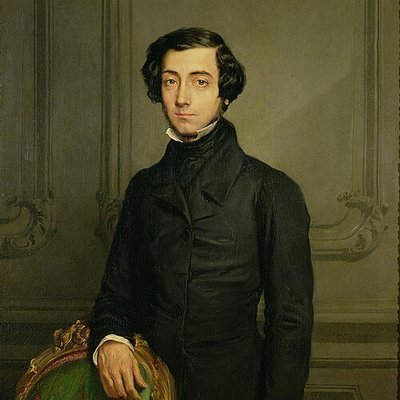
"I know of no country, indeed, where the love of money has taken stronger hold on the affections of men, and where the profounder contempt is expressed for the theory of the permanent equality of property."
"The pursuit of wealth generally diverts men of great talents and strong passions from the pursuit of power; and it frequently happens that a man does not undertake to direct the fortunes of the state until he has shown himself incompetent to conduct his own."
"I am not primarily an advocate of capitalism, but of egoism; and I am not primarily an advocate of egoism, but of reason. If one recognizes the supremacy of reason and applies it consistently, all the rest follows."
"When I say “capitalism,” I mean a full, pure, uncontrolled, unregulated laissez-faire capitalism—with a separation of state and economics, in the same way and for the same reasons as the separation of state and church."
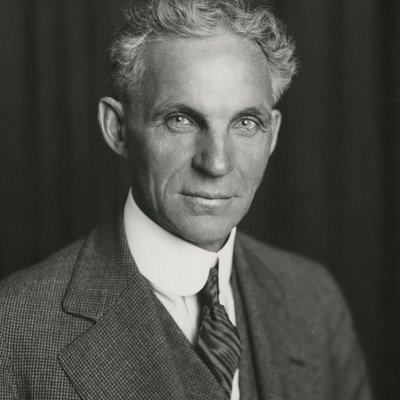
"A business absolutely devoted to service will have only one worry about profits. They will be embarrassingly large."
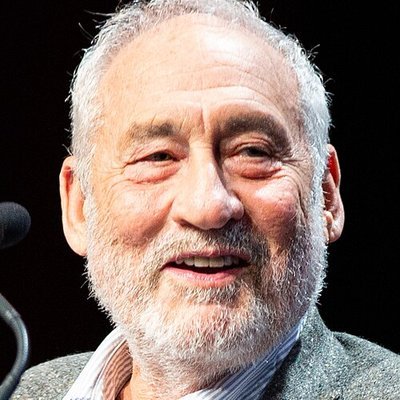
"They [ free market policies] were never based on solid empirical and theoretical foundations, and even as many of these policies were being pushed, academic economists were explaining the limitations of markets — for instance, whenever information is imperfect, which is to say always."
"There was an incongruity between many of the models that we were taught and the policy positions that our teachers (and we) believed in. The models seemed more consonant with free market prescriptions, though they were presented more as benchmarks rather than full characterizations."
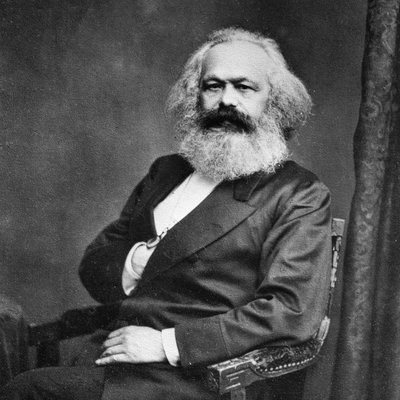
"The directing motive, the end and aim of capitalist production, is to extract the greatest possible amount of surplus value, and consequently to exploit labor-power to the greatest possible extent."
"As the chosen people bore in their features the sign manual of Jehovah , so the division of labour brands the manufacturing workman as the property of capital ."
"Capitalist production, therefore, develops technology, and the combining together of various processes into a social whole, only by sapping the original sources of all wealth — the soil and the labourer."
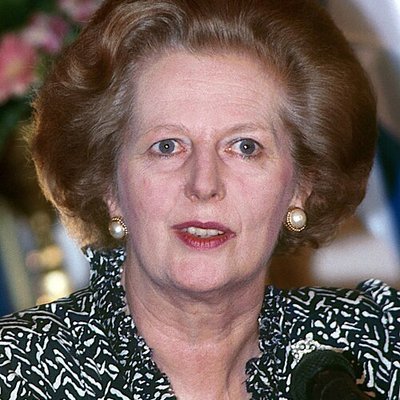
"Let me give you my vision. A man's right to work as he will to spend what he earns to own property to have the State as servant and not as master these are the British inheritance. They are the essence of a free economy. And on that freedom all our other freedoms depend."
"Unfortunately in our education system youngsters are still not given sufficient encouragement to go into industry or commerce and not told that it is a good thing to make an honest profit. They should be told that if you don't make a profit, you won't be in business very long because you haven't anything to plow back for tomorrow. You make your profit by pleasing others so you have to make it honestly."
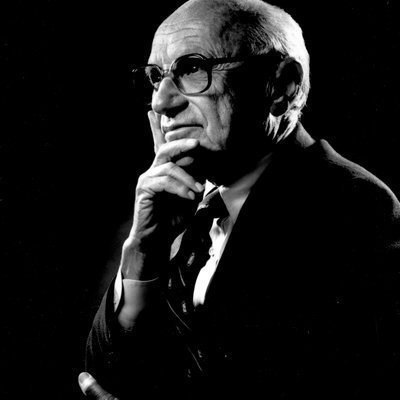
"The Chilean economy did very well, but more important, in the end the central government, the military junta, was replaced by a democratic society. So the really important thing about the Chilean business is that free markets did work their way in bringing about a free society."
"An income tax intended to reduce inequality and promote the diffusion of wealth has in practice fostered reinvestment of corporate earnings, thereby favoring the growth of large corporations, inhibiting the operation of the capital market, and discouraging the establishment of new enterprises."
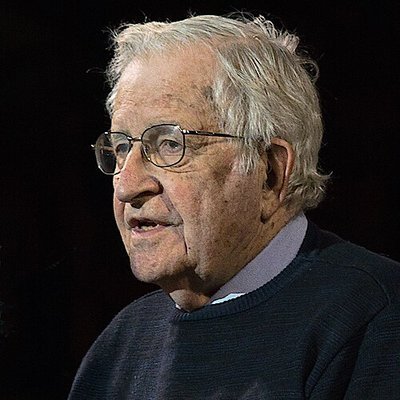
"The "corporatization of America" during the past century has been an attack on democracy—and on markets, part of the shift from something resembling "capitalism" to the highly administered markets of the modern state/corporate era. A current variant is called "minimizing the state," that is, transferring decision-making power from the public arena to somewhere else: "to the people" in the rhetoric of power; to private tyrannies, in the real world."
"We’ve been living through about 45 years of a particular socio-economic political system, what’s called neoliberalism... The so-called free trade agreements or radically protectionist that we’re seeing that right now in front of our eyes, we see virtual monopoly on drugs. What we’ve really had for the 45 years is what so many economists have called a bail out economy. So it’s one side of class war, markets for the poor, protection for the rich."
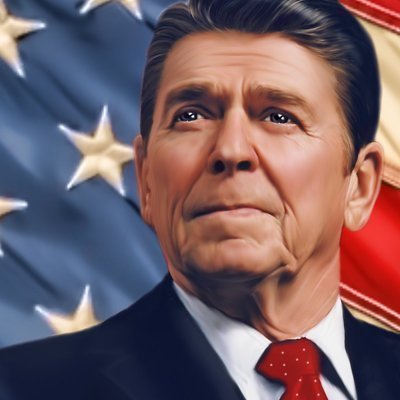
"The scale of the plague is surprising, indeed shocking, but not its appearance. Nor the fact that the U.S. has the worst record in responding to the crisis . [...] Market signals were clear: There's no profit in preventing a future catastrophe . [...] The government could have stepped in, but that's barred by reigning doctrine: "Government is the problem," Reagan told us with his sunny smile, meaning that decision-making has to be handed over even more fully to the business world, which is devoted to private profit and is free from influence by those who might be concerned with the common good . The years that followed injected a dose of neoliberal brutality to the unconstrained capitalist order and the twisted form of markets it constructs. [...] The neoliberal version of capitalism has been in force since Reagan and Margaret Thatcher , beginning shortly before. There should be no need to detail its grim consequences. Reagan's generosity to the super-rich is of direct relevance today as another bailout is in progress. Reagan quickly lifted the ban on tax havens and other devices to shift the tax burden to the public, and also authorized stock buybacks — a device to inflate stock values and enrich corporate management and the very wealthy (who own most of the stock) while undermining the productive capacity of the enterprise."