Consumerism
Consumerism is the cultural and economic ideology that equates personal wellbeing with the acquisition and consumption of material goods. It is both the engine of modern economic growth and a subject of critique from environmental, psychological, and social perspectives.
Arguments for and against
Its relationship to personal wellbeing
Consumer choice expands the material conditions of a good life — access to healthcare, education, recreation, and cultural goods — and rising consumption standards have genuinely improved quality of life for billions of people.
A large body of hedonic research shows that beyond a moderate income threshold, additional consumption produces diminishing wellbeing returns; status competition through consumption is a zero-sum game that leaves participants no better off.
Its environmental consequences
Consumer demand drives innovation in sustainable products and business models; affluent consumers are the most likely to adopt solar panels, electric vehicles, and other technologies essential to decarbonization.
The sheer volume of material throughput driven by consumer culture — extraction, production, transport, disposal — is the primary driver of climate change, biodiversity loss, and resource depletion at planetary scale.
Its effects on cultural and social life
Consumer culture enables diverse expressions of identity, supports creative industries, and generates the economic activity that funds arts, media, and cultural institutions that enrich social life.
When commercial consumption becomes the primary frame for social participation and self-expression, it crowds out non-market modes of meaning-making — civic engagement, artisanal craft, community reciprocity — that many people find more fulfilling.
Its role in economic stability and growth
Consumer spending is the largest component of GDP in most advanced economies; maintaining consumer demand is essential for employment, tax revenue, and the economic stability that supports social programs.
An economy structurally dependent on perpetual consumption growth is inherently fragile and incompatible with ecological limits; alternative economic models emphasizing wellbeing, durability, and sufficiency may be more stable long-term.
What influencers say
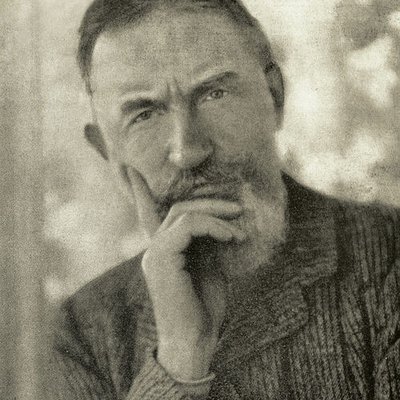
"We have no more right to consume happiness without producing it than to consume wealth without producing it."
"The road to ignorance is paved with good editions. Only the illiterate can afford to buy good books now."
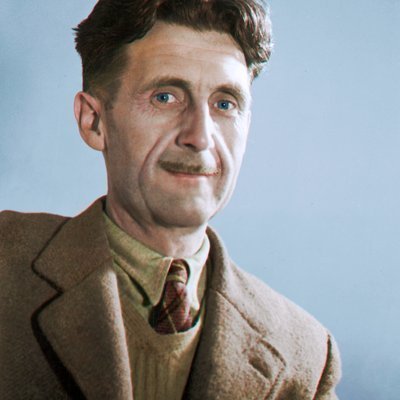
"In a town like London there are always plenty of not quite certifiable lunatics walking the streets, and they tend to gravitate towards bookshops, because a bookshop is one of the few places where you can hang about for a long time without spending any money."
"Mr Auden's brand of amoralism is only possible if you are the kind of person who is always somewhere else when the trigger is pulled. So much of left-wing thought is a kind of playing with fire by people who don't even know that fire is hot."
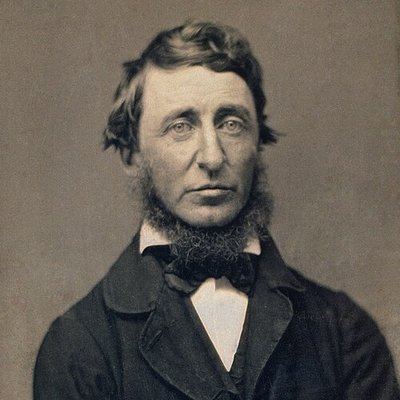
"The youth gets together his materials to build a bridge to the moon, or, perchance, a palace or temple on the earth, and, at length, the middle-aged man concludes to build a woodshed with them."
"Money is not required to buy one necessity of the soul."
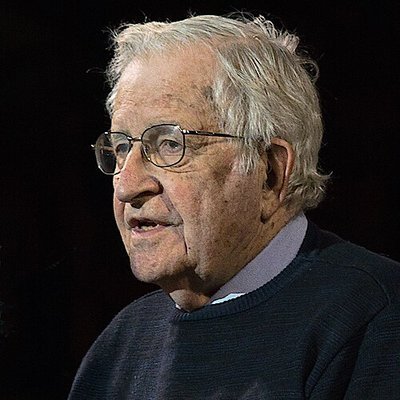
"I find [no] credible evidence [of anti-Semitism or neo-Nazism] in the material that I have read concerning [Faurisson], either in the public record or in private correspondence. As far as I can determine, he is a relatively apolitical liberal of some sort."
"We take for granted that the organism does not learn to grow arms or to reach puberty... When we turn to the mind and its products, the situation is not qualitatively different from what we find in the case of the body."
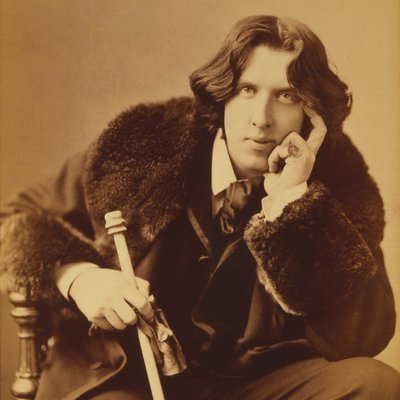
"Even you are not rich enough, Sir Robert, to buy back your past. No man is."
"It will be a marvellous thing--the true personality of man--when we see it. It will grow naturally and simply, flowerlike, or as a tree grows. It will not be at discord. It will never argue or dispute. It will not prove things. It will know everything. And yet it will not busy itself about knowledge. It will have wisdom. Its value will not be measured by material things. It will have nothing. And yet it will have everything, and whatever one takes from it, it will still have, so rich will it be. It will not be always meddling with others, or asking them to be like itself. It will love them because they will be different. And yet while it will not meddle with others, it will help all, as a beautiful thing helps us, by being what it is. The personality of man will be very wonderful. It will be as wonderful as the personality of a child."