Social Safety Net
Government programs providing basic economic security to citizens, including unemployment benefits, food assistance, housing support, and disability payments. Debate concerns adequacy, work incentives, fiscal sustainability, and social solidarity.
Arguments for and against
Poverty reduction
Robust social safety nets demonstrably reduce absolute poverty, food insecurity, and child deprivation. Countries with comprehensive programs show lower rates of preventable suffering and greater social mobility than those with minimal provision.
Well-designed safety nets can become permanent income supports for those capable of self-sufficiency. When benefits are generous and conditions lax, programs may substitute for rather than complement labor market participation, raising dependency concerns.
Work incentives
Modern evidence from guaranteed income experiments suggests that basic income security actually increases productive activity by enabling risk-taking, education, and job search. Fear of destitution is a poor labor market incentive.
Means-tested benefits with high marginal withdrawal rates create effective tax rates that can exceed 80% on low-income workers re-entering employment. This genuinely reduces the financial return to work and can trap individuals in dependency.
Social solidarity and cohesion
Universal programs — in which all citizens contribute and all can benefit — build cross-class solidarity and political durability. Shared social insurance reinforces the sense that citizens have mutual obligations to one another.
Taxpayers who perceive benefits as flowing primarily to out-groups — immigrants, racial minorities, the 'undeserving poor' — withdraw political support. Social heterogeneity can erode the solidarity that sustains generous safety nets over time.
Fiscal sustainability
Investing in social protection reduces downstream costs: early childhood nutrition and healthcare programs generate fiscal returns through improved educational attainment, productivity, and reduced criminal justice expenditure.
Aging populations, declining birth rates, and constrained labor forces are placing structurally growing pressure on social insurance systems. Without reform to eligibility ages, benefit formulas, or funding mechanisms, long-term fiscal sustainability is genuinely at risk.
What influencers say
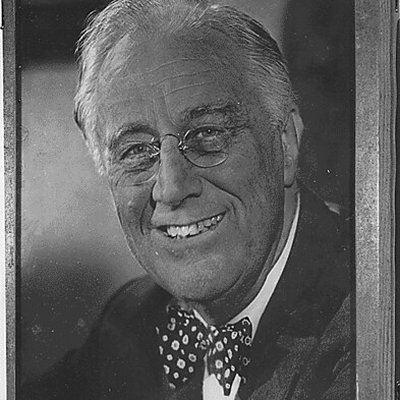
"Social unrest and a deepening sense of unfairness are dangers to our national life which we must minimize by rigorous methods. People know that vast personal incomes come not only through the effort or ability or luck of those who receive them, but also because of the opportunities for advantage which Government itself contributes. Therefore, the duty rests upon the Government to restrict such incomes by very high taxes."
"Enlightened business is learning that competition ought not to cause bad social consequences which inevitably react upon the profits of business itself. All but the hopelessly reactionary will agree that to conserve our primary resources of man power, government must have some control over maximum hours, minimum wages , the evil of child labor and the exploitation of unorganized labor."

"Socialist governments traditionally do make a financial mess. They always run out of other people's money. It's quite a characteristic of them."
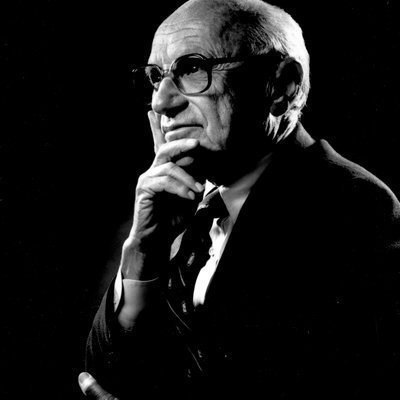
"Spending by government currently amounts to about 45 percent of national income. By that test, government owns 45 percent of the means of production that produce the national income. The U.S. is now 45 percent socialist."
"The average income of blacks here is far higher than the average income of all the people in the Soviet Union. The official government definition of the poverty line in the U.S. is higher than the average income in the Soviet Union; it’s higher than the income received by 90 percent of the people on the world’s surface. Now, that doesn’t mean blacks aren’t subject to injustice; of course they are."

"Shouldn't someone tag Mr. Kennedy's "bold new imaginative" program with its proper age? Under the tousled boyish haircut it is still old Karl Marx — first launched a century ago. There is nothing new in the idea of a government being Big Brother to us all. Hitler called his "State Socialism" and way before him it was " benevolent monarchy .""
"I am old enough to remember the presidency of Lyndon Johnson , when the government fought a "war on poverty." In recent years that war has been transformed by representatives of both major parties into a war on the poor. More important yet, but less reported, is that in the years since Ronald Reagan was elected president, corporate America has waged war against this nation's workers."
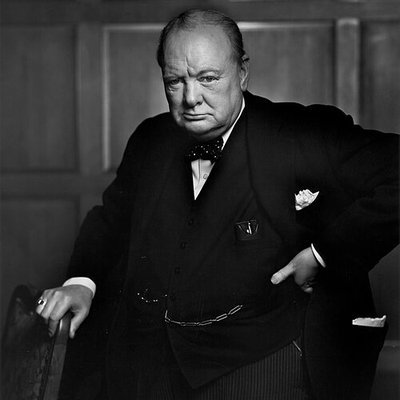
"Only the final results can prove whether military autocracies or Parliamentary Governments are more likely — take them for all in all — to preserve the welfare and safety of great nations. If the result is inconclusive, the conflict will be renewed after an uneasy interval. But when an absolute decision is obtained the system of the victors — whoever they are — will probably be adopted to a very great extent by the vanquished."
"The enthronement in office of a Socialist Government will be a serious national misfortune such as has usually befallen great States only on the morrow of defeat in war. It will delay the return of prosperity; it will check enterprise and impair credit; it will open a period of increasing political confusion and disturbance."