Social Stratification
The hierarchical arrangement of individuals and groups into social classes based on wealth, power, status, and cultural capital. Debate concerns whether stratification is a functional necessity or an unjust structure that perpetuates inequality.
Arguments for and against
Economic incentives and productivity
Differential rewards for skill, effort, and risk-taking incentivize the investment and innovation that drives economic growth. Stratification that reflects genuine meritocratic differences in contribution may produce social benefits that justify inequality.
Most stratification reflects inherited advantage — wealth, social capital, and educational access — rather than merit. Research consistently shows that intergenerational mobility is lower in highly stratified societies, meaning inequality reproduces itself regardless of individual effort.
Social mobility
Open stratification systems with strong meritocratic norms enable individuals to rise through ability and effort. The aspiration for upward mobility motivates human capital investment and drives entrepreneurship across social classes.
The relationship between stratification and mobility is inverse: the most unequal societies — the United States, the United Kingdom — exhibit the lowest intergenerational mobility. A 'Great Gatsby Curve' of inequality undermines the meritocratic narrative used to justify it.
Social cohesion and health
Status differentiation fulfills social and psychological functions — providing identity, motivation, and role clarity. Some degree of hierarchy may be an unavoidable feature of complex cooperative societies, regardless of political system.
Epidemiological research shows that the degree of inequality — not just absolute poverty — predicts population health outcomes, trust levels, and social cohesion. More equal societies perform better on nearly every social indicator regardless of average income level.
Political implications
Meritocratic stratification can produce diverse elites with legitimate authority, providing political stability and direction in complex societies where expertise and coordination matter enormously.
Entrenched stratification systematically translates economic inequality into political inequality. Wealthy individuals and corporations shape policy in ways that reinforce their advantages, producing a feedback loop that corrupts democratic governance.
What influencers say
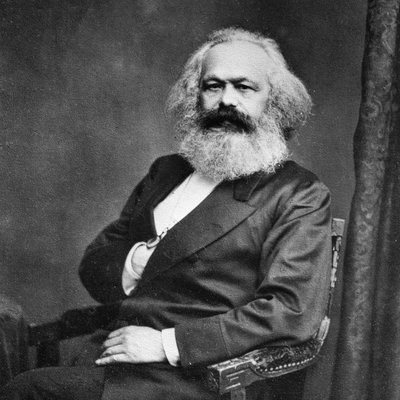
"Of all the classes that stand face to face with the bourgeoisie today, the proletariat alone is a really revolutionary class. Paragraph 44, lines 1-2."
"The immediate aim of the Communists is the same as that of all the other proletarian parties: Formation of the proletariat into a class, overthrow of the bourgeois supremacy, conquest of political power by the proletariat. Paragraph 7."