Free Education
Free education refers to educational provision at no direct cost to the student, typically funded through general taxation. The debate encompasses primary, secondary, and tertiary levels and involves questions about equity, quality, and the respective roles of public and private investment.
Arguments for and against
Its role in equity and social mobility
Removing financial barriers to education ensures that access to knowledge and credentials is determined by ability and ambition rather than family wealth, reducing intergenerational inequality and maximizing the use of human potential.
Free provision does not guarantee equal quality; when access is universal but quality varies by geography and institution, students from disadvantaged backgrounds often attend worse-resourced free institutions than their wealthy peers access through private spending.
The question of public versus private funding
Education generates substantial positive externalities — a more productive economy, lower crime, stronger civic participation — that justify public funding, since the social returns exceed what private individuals would invest in their own education.
Public funding for university education is regressive when graduates earn significantly more than non-graduates; income-contingent loan repayment systems can achieve universal access while ensuring that those who benefit most also contribute to the cost.
Its effect on educational quality and institutional incentives
Public funding insulates educational institutions from market pressures that distort academic priorities toward profitable disciplines and away from humanities, arts, and pure sciences whose social value is genuine but not easily monetized.
Without price signals and competition for student fees, publicly funded institutions face weaker incentives to improve teaching quality, update curricula, or respond to labor market needs — producing well-intentioned but sometimes poor-quality provision.
Its fiscal sustainability
Countries including Germany, Finland, and Norway provide high-quality tertiary education at no cost to students while maintaining fiscal sustainability, demonstrating that free education is achievable within diverse tax systems.
Demographic change and rising higher education participation rates make the fiscal burden of universal free university education increasingly difficult to sustain without either reducing quality or imposing significant tax increases.
What influencers say
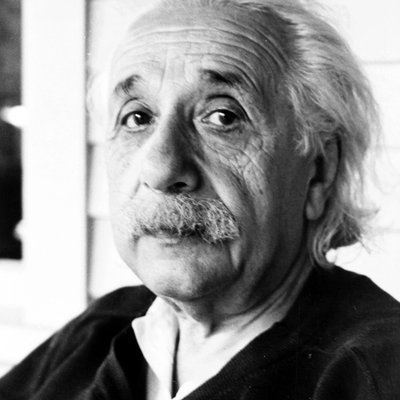
"[I do not] carry such information in my mind since it is readily available in books. ...The value of a college education is not the learning of many facts but the training of the mind to think."
"The only progress I can see is progress in the organization. The ordinary human being does not live long enough to draw any substantial benefit from his own experience. And no one, it seems, can benefit by the experiences of others. Being both a father and teacher, I know we can teach our children nothing. We can transmit to them neither our knowledge of life nor of mathematics. Each must learn its lesson anew."
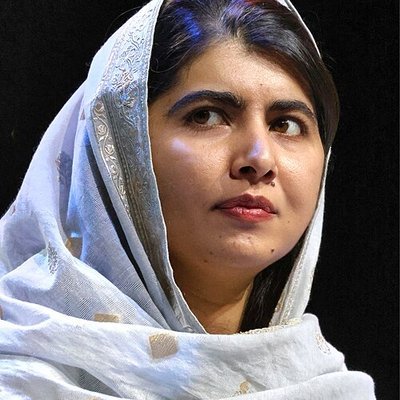
"So let us wage a glorious struggle against illiteracy, poverty and terrorism, let us pick up our books and our pens, they are the most powerful weapons. One child, one teacher, one book and one pen can change the world. Education is the only solution."
"The world can no longer accept, the world can no longer accept that basic education is enough. Why do leaders accept that for children in developing countries, only basic literacy is sufficient, when their own children do homework in Algebra, Mathematics, Science and Physics?"
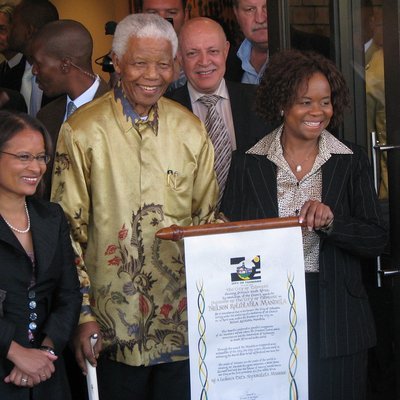
"We admire the achievements of the Cuban revolution in the sphere of social welfare. We note the transformation from a country of imposed backwardness to universal literacy. We acknowledge your advances in the fields of health , education, and science."
"We are deeply concerned, both in our country and here, of the very large number of dropouts by schoolchildren. This is a very disturbing situation, because the youth of today are the leaders of tomorrow ... try as much as possible to remain in school, because education is the most powerful weapon which we can use."
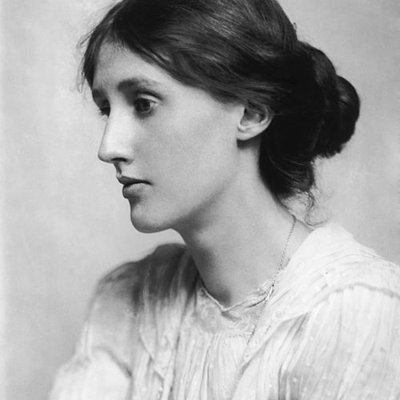
"Lock up your libraries if you like; but there is no gate, no lock, no bolt that you can set upon the freedom of my mind."