Nuclear Weapons Abolition
The proposal to eliminate all nuclear weapons globally through multilateral treaties and verified disarmament, based on the view that their existence poses an unacceptable existential risk to humanity.
Arguments for and against
Existential risk reduction
Nuclear weapons are the only human technology capable of ending civilization. The only way to eliminate the risk of intentional use, accident, or unauthorized launch is to eliminate the weapons themselves. No other risk management strategy is sufficient.
Nuclear abolition is meaningless without universal, verifiable compliance. In a world where any state could cheat and become the sole nuclear power, a disarmament treaty might paradoxically increase the incentive for covert programs and make nuclear use more strategically attractive.
Nuclear deterrence stability
Mutually Assured Destruction has maintained strategic stability between great powers since 1945. Nuclear abolition would remove this deterrent, potentially making large-scale conventional warfare — which killed tens of millions in the pre-nuclear era — more likely.
Deterrence stability rests on assumptions of rationality, reliable command-and-control, and crisis communication that historical near-misses — Stanislav Petrov, Able Archer 83 — show are not guaranteed. Deterrence is stable until, catastrophically, it is not.
Verification and enforcement
Modern verification technologies — seismic monitoring, satellite imagery, on-site inspection regimes — have advanced sufficiently to make meaningful disarmament verification possible, as demonstrated by successful intermediate-range missile treaties.
Nuclear weapons knowledge cannot be uninvented. Even verified disarmament leaves states with the technical knowledge to reconstruct arsenals rapidly. The verification challenge is not just counting weapons but monitoring scientific capacity, which is nearly impossible.
Nonproliferation and equity
The Nuclear Non-Proliferation Treaty's bargain — disarmament by nuclear states in exchange for non-acquisition by others — has been systematically undermined by the five recognized powers' failure to disarm, fueling resentment and proliferation pressure.
Nuclear abolition is more likely to be achieved by states with limited arsenals, leaving determined holdouts — North Korea, potential future proliferators — as nuclear monopolists. Partial abolition may be more dangerous than the current multi-polar deterrence structure.
What influencers say
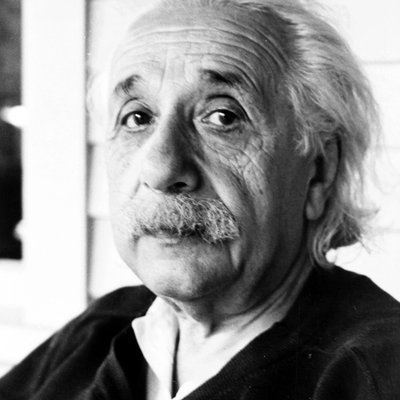
"I made one great mistake in my life—when I signed the letter to President Roosevelt recommending that atom bombs be made; but there was some justification—the danger that the Germans would make them."
"Without disarmament there can be no lasting peace. On the contrary, the continuation of military armaments in their present extent will with certainty lead to new catastrophies...For the creation of this public opinion in favor of disarmament every person living shares the responsibility, through ever deed and every word."

"Either we must have war against Russia, before she has the atom bomb, or we will have to lie down and let them govern us. ... Anything is better than submission."
"There is a further advantage [to hydrogen bombs]: the supply of uranium in the planet is very limited, and it might be feared that it would be used up before the human race was exterminated, but now that the practically unlimited supply of hydrogen can be utilized, there is considerable reason to hope that homo sapiens may put an end to himself, to the great advantage of such less ferocious animals as may survive. But it is time to return to less cheerful topics."

"Every thinking person fears nuclear war and every technological nation plans for it. Everyone knows it's madness, and every country has an excuse."

"Although September 11 was horrible, it didn't threaten the survival of the human race, like nuclear weapons do."
"As scientists, we understand the dangers of nuclear weapons and their devastating effects, and we are learning how human activities and technologies are affecting climate systems in ways that may forever change life on Earth. As citizens of the world, we have a duty to alert the public to the unnecessary risks that we live with every day, and to the perils we foresee if governments and societies do not take action now to render nuclear weapons obsolete and to prevent further climate change... There’s a realization that we are changing our climate for the worse. That would have catastrophic effects. Although the threat is not as dire as that of nuclear weapons right now, in the long term we are looking at a serious threat."