Punishment
The deliberate infliction of a penalty on a person found to have committed a wrong or offense. Debate centers on whether punishment serves justice, deters future misconduct, or simply perpetuates cycles of harm.
Arguments for and against
Deterrence
Credible punishment creates a rational disincentive: when the expected cost of an offense outweighs its benefit, potential offenders choose compliance. Well-publicized penalties demonstrably reduce certain crimes, especially premeditated ones.
Most crime is impulsive or driven by circumstance rather than rational calculation. Studies consistently show that the certainty of being caught matters far more than the severity of punishment, limiting deterrence as a primary justification.
Retributive justice
Punishment satisfies a deep moral intuition that wrongdoers deserve to suffer proportionally for their acts. This restores a kind of cosmic balance, affirming the dignity of victims and the seriousness with which society treats harm.
Retribution is institutionalized vengeance dressed in moral language. It focuses entirely on the past rather than future outcomes and can justify disproportionate harshness when public anger, not principle, drives sentencing decisions.
Rehabilitation potential
Punishment structured around education, therapy, and skills training gives offenders a genuine path to reform. Systems that prioritize rehabilitation — like those in Scandinavia — show lower recidivism rates and reduced long-term social costs.
Punitive conditions — overcrowding, violence, social stigma after release — actively undermine rehabilitation. Treating people as deserving suffering rather than capable of change makes reintegration harder and communities less safe over time.
Social equity
Applied impartially, punishment upholds the rule of law and signals that no one is above accountability regardless of status. Consistent enforcement reinforces social trust and the legitimacy of legal institutions.
Punishment in practice falls disproportionately on the poor, racial minorities, and the mentally ill. When sentencing reflects social inequality more than moral culpability, punishment amplifies injustice rather than correcting it.
What influencers say
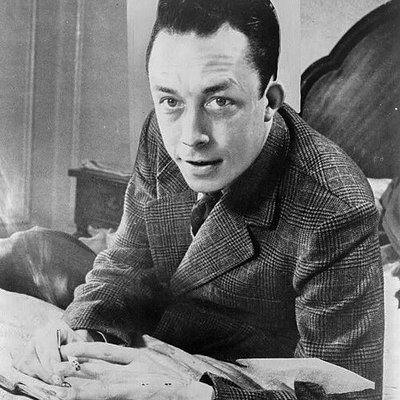
"The gods had condemned Sisyphus to ceaselessly rolling a rock to the top of a mountain , whence the stone would fall back of its own weight. They had thought with some reason that there is no more dreadful punishment than futile and hopeless labor ."

"That which does not kill us, makes us stronger."
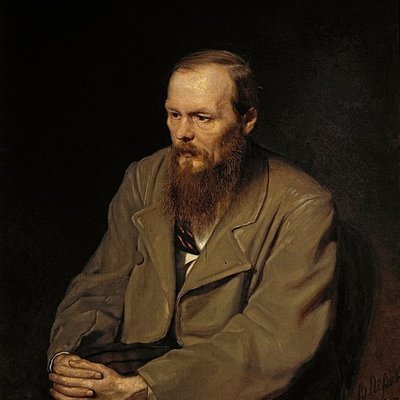
"To kill someone for committing murder is a punishment incomparably worse than the crime itself. Murder by legal sentence is immeasurably more terrible than murder by brigands."
"People talk sometimes of a bestial cruelty, but that's a great injustice and insult to the beasts; a beast can never be so cruel as a man, so artistically cruel. The tiger only tears and gnaws, that's all he can do. He would never think of nailing people by the ears, even if he were able to do it."
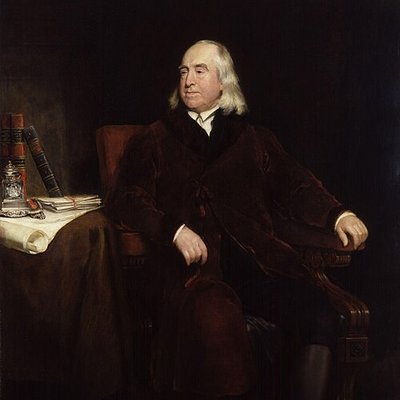
"It is the principle of antipathy which leads us to speak of offences as deserving punishment. It is the corresponding principle of sympathy which leads us to speak of certain actions as meriting reward. This word merit can only lead to passion and error. It is effects good or bad which we ought alone to consider."
"Whenever you are about to be oppressed, you have a right to resist oppression: whenever you conceive yourself to be oppressed, conceive yourself to have a right to make resistance, and act accordingly. In proportion as a law of any kind—any act of power, supreme or subordinate, legislative, administrative, or judicial, is unpleasant to a man, especially if, in consideration of such its unpleasantness, his opinion is, that such act of power ought not to have been exercised, he of course looks upon it as oppression: as often as anything of this sort happens to a man—as often as anything happens to a man to inflame his passions,—this article, for fear his passions should not be sufficiently inflamed of themselves, sets itself to work to blow the flame, and urges him to resistance. Submit not to any decree or other act of power, of the justice of which you are not yourself perfectly convinced. If a constable call upon you to serve in the militia, shoot the constable and not the enemy;—if the commander of a press-gang trouble you, push him into the sea—if a bailiff, throw him out of the window. If a judge sentence you to be imprisoned or put to death, have a dagger ready, and take a stroke first at the judge."
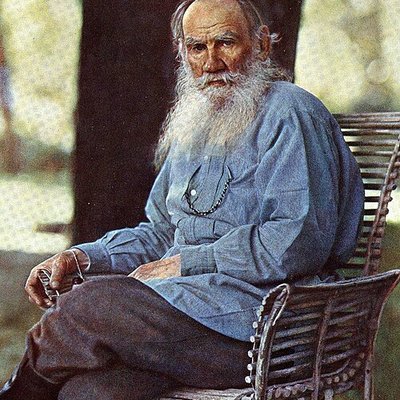
"The Quakers sent me books, from which I learnt how they had, years ago, established beyond doubt the duty for a Christian of fulfilling the command of non-resistance to evil by force, and had exposed the error of the Church's teaching in allowing war and capital punishment."
"If people would but understand that they are not the sons of some fatherland or other, nor of Governments, but are sons of God, and can therefore neither be slaves nor enemies one to another - those insane, unnecessary, worn-out, pernicious organizations called Governments, and all the sufferings, violations, humiliations and crimes which they occasion, would cease."

"No one truly knows a nation until one has been inside its jails. A nation should not be judged by how it treats its highest citizens but its lowest ones."
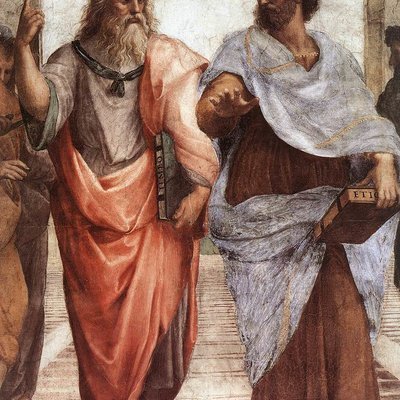
"Zeus, the god of gods, who rules according to law, and is able to see into such things, perceiving that an honourable race was in a woeful plight, and wanting to inflict punishment on them, that they might be chastened and improve, collected all the gods into their most holy habitation, which, being placed in the centre of the world, beholds all created things. And when he had called them together, he spake as follows— [** The rest of the Dialogue of Critias has been lost ]"
"Some say that the body is the " tomb " of the soul , their notion being that the soul is buried in the present life ; and again, because by its means the soul gives any signs which it gives, it is for this reason also properly called "sign". But I think it most likely that the Orphic poets gave this name, with the idea that the soul is undergoing punishment for something; they think it has the body as an enclosure to keep it safe, like a prison, and this is, as the name itself denotes, the "safe" for the soul, until the penalty is paid, and not even a letter needs to be changed."
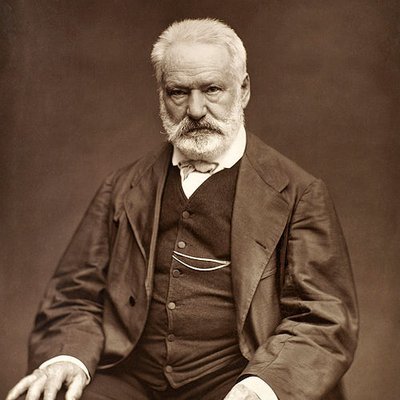
"Let us sum up this government! Who is at the Élysée and the Tuileries? Crime. Who is established at the Luxembourg? Baseness. Who at the Palais Bourbon? Imbecility. Who at the Palais d'Orsay?...And who are in the prisons... in the dungeons...in exile? Law, honour, intelligence, liberty, and the right. Book I, VI"
"It is time, we repeat, that this monstrous slumber of men's consciences should end. It must not be, after that fearful scandal, the triumph of crime, that a scandal still more fearful should be presented to mankind: the indifference of the civilized world. Book I, III"

"Ils ne se servent de la pensée que pour autoriser leurs injustices, et n'emploient les paroles que pour déguiser leurs pensées."
"The reasonable worship of a just God who punishes and rewards, would undoubtedly contribute to the happiness of men; but when that salutary knowledge of a just God is disfigured by absurd lies and dangerous superstitions, then the remedy turns to poison."