War
Organized armed conflict between nations, states, or non-state groups, pursued through military force. Debate concerns the conditions under which war may be justified, its humanitarian costs, and alternatives to military resolution of conflict.
Arguments for and against
Just war theory and legitimate cause
War conducted under conditions of just war theory — legitimate authority, just cause such as defense against aggression, right intention, last resort, and proportionality — may be morally justified and is recognized as such in international law.
Just war criteria are almost always claimed by both sides of any conflict. The framework serves more often to legitimize wars that states have already decided to fight than to provide a genuine deliberative check on resort to force.
Humanitarian cost
Modern international humanitarian law, precision-guided munitions, and professional military doctrine have reduced civilian casualty rates relative to the industrial-age conflicts of the twentieth century, limiting the humanitarian costs of targeted military operations.
Even 'limited' modern wars produce mass civilian suffering through displacement, economic disruption, infrastructure destruction, and psychological trauma. The scale of human cost in conflicts from Syria to Yemen demonstrates that war's humanitarian toll remains catastrophic.
Conflict resolution and alternatives
War has historically resolved conflicts that diplomacy failed to address — defeating genocidal regimes, ending territorial aggression, and establishing post-conflict stability that enables durable peace. Some conflicts have no non-military resolution.
Military victory rarely resolves the underlying grievances that generate conflict. Comprehensive diplomacy, economic development, peacekeeping, and institution-building address root causes in ways that military force cannot, and at a fraction of the human and financial cost.
Deterrence and arms races
Military capability — credibly projected — deters aggression and maintains stability among great powers. The 'long peace' between nuclear-armed states since 1945 suggests that credible mutual deterrence can prevent the most destructive forms of conflict.
Military deterrence requires continuous investment in weapons systems, fueling arms races that divert resources from human development and periodically generate crises when deterrence is miscalculated. The stability attributed to deterrence may be partly the result of luck.
What influencers say
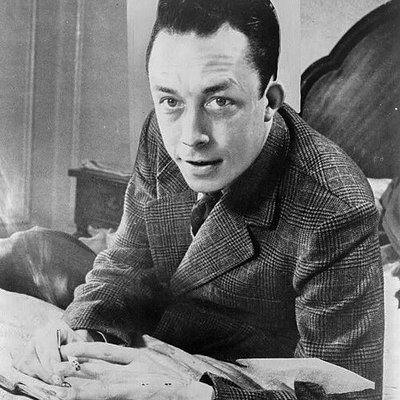
"The world is what it is, which is to say, nothing much. This is what everyone learned yesterday, thanks to the formidable concert of opinion coming from radios, newspapers, and information agencies. Indeed we are told, in the midst of hundreds of enthusiastic commentaries, that any average city can be wiped out by a bomb the size of a football. American, English, and French newspapers are filled with eloquent essays on the future, the past, the inventors, the cost, the peaceful incentives, the military advantages, and even the life-of-its-own character of the atom bomb. We can sum it up in one sentence: Our technical civilization has just reached its greatest level of savagery. We will have to choose , in the more or less near future , between collective suicide and the intelligent use of our scientific conquests. Meanwhile we think there is something indecent in celebrating a discovery whose use has caused the most formidable rage of destruction ever known to man. What will it bring to a world already given over to all the convulsions of violence, incapable of any control, indifferent to justice and the simple happiness of men — a world where science devotes itself to organized murder? No one but the most unrelenting idealists would dare to wonder."
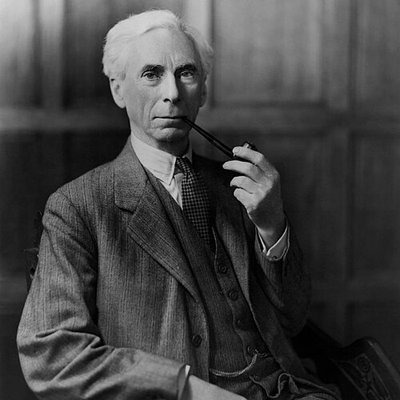
"Of all evils of war the greatest is the purely spiritual evil: the hatred, the injustice, the repudiation of truth, the artificial conflict."
"I believe that the abolition of private ownership of land and capital is a necessary step toward any world in which the nations are to live at peace with one another."
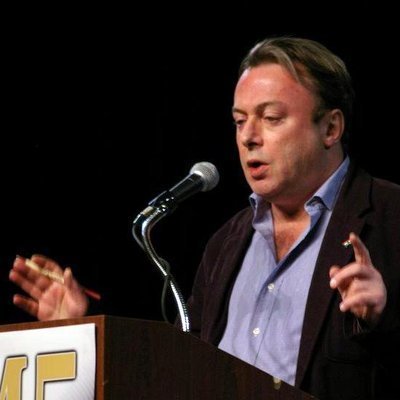
"Many of the points made by the antiwar movement have been consciously assimilated by the Pentagon and its lawyers and advisers. Precision weaponry is good in itself, but its ability to discriminate is improving and will continue to improve. Cluster bombs are perhaps not good in themselves, but when they are dropped on identifiable concentrations of Taliban troops, they do have a heartening effect."
"The ( Catholic ) church, as far as I know, has not endorsed any war as just since it supported General Franco 's invasion of Spain to destroy the Spanish republic with a Muslim mercenary army in the thirties, on the side of Hitler ."
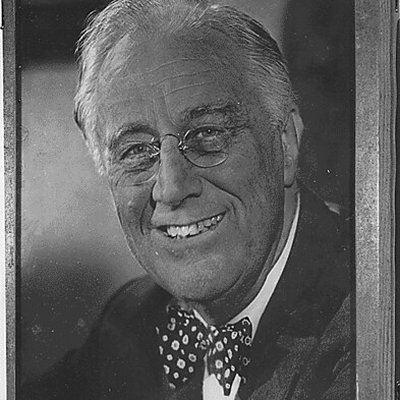
"In the days and in the years that are to come we shall work for a just and honorable peace, a durable peace, as today we work and fight for total victory in war. We can and we will achieve such a peace ."
"We are not isolationists except in so far as we seek to isolate ourselves completely from war. Yet we must remember that so long as war exists on earth there will be some danger that even the Nation which most ardently desires peace may be drawn into war."
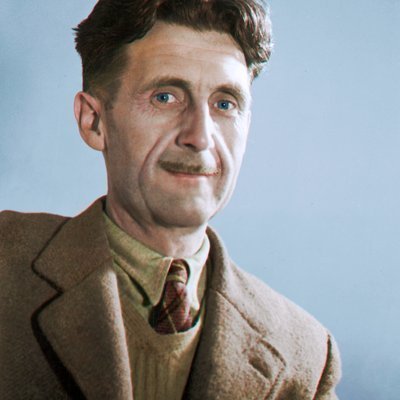
"In stationary warfare there are three things that all soldiers long for: a battle, more cigarettes, and a week's leave."
"Thus, for example, tanks, battleships and bombing planes are inherently tyrannical weapons, while rifles, muskets, long-bows, and hand-grenades are inherently democratic weapons. A complex weapon makes the strong stronger, while a simple weapon — so long as there is no answer to it — gives claws to the weak."
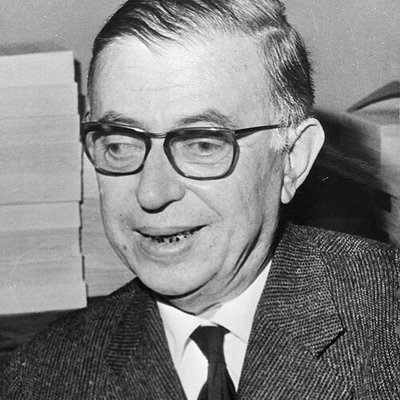
"You know how much I admire Che Guevara . In fact, I believe that the man was not only an intellectual but also the most complete human being of our age: as a fighter and as a man, as a theoretician who was able to further the cause of revolution by drawing his theories from his personal experience in battle."
"Man is always separated from what he is by all the breadth of the being which he is not. He makes himself known to himself from the other side of the world and he looks from the horizon toward himself to recover his inner being."
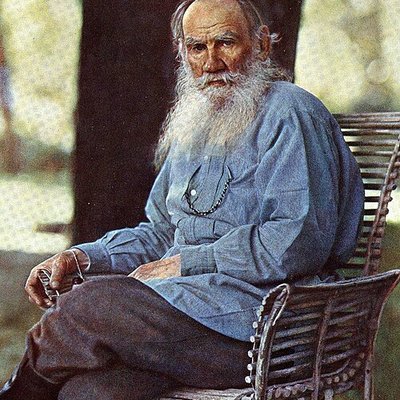
"I cannot recall those years without horror, loathing, and heart-rending pain. I killed people in war, challenged men to duels with the purpose of killing them, and lost at cards; I squandered the fruits of the peasants' toil and then had them executed; I was a fornicator and a cheat. Lying, stealing, promiscuity of every kind, drunkenness, violence, murder — there was not a crime I did not commit... Thus I lived for ten years."
"We cannot pretend that we do not see the armed policeman who marches up and down beneath our window to guarantee our security while we eat our luxurious dinner, or look at the new piece at the theater, or that we are unaware of the existence of the soldiers who will make their appearance with guns and cartridges directly our property is attacked."
"What difference does it make to the dead, the orphans, and the homeless, whether the mad destruction is wrought under the name of totalitarianism or the holy name of liberty and democracy?"
""When there is only a choice between cowardice and violence, I would advise violence… I would rather have India resort to arms in order to defend her honour than to remain a helpless witness to her own dishonour.""
""Cowardice is impotence worse than violence. The coward desires revenge but being afraid to die, he looks to others… to do the work of defense for him.""
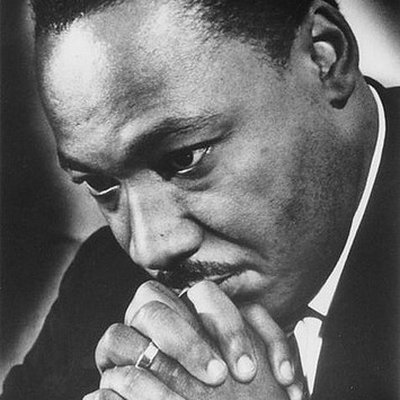
"A second way that oppressed people sometimes deal with oppression is to resort to physical violence and corroding hatred. Violence often brings about momentary results. Nations have frequently won their independence in battle. But in spite of temporary victories, violence never brings permanent peace. It solves no social problem; it merely creates new and more complicated ones."
"Beyond the war years the grim and tortured struggle of Negroes to win their own freedom is an epic of battle against frightful odds. If we have failed to do enough, it was not the will for freedom that was weak, but the forces against us which were too strong."
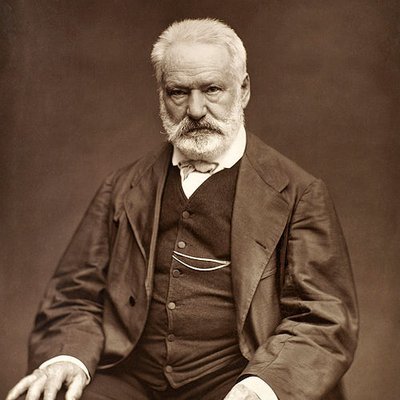
"Two great problems hang over the world. War must disappear, and conquest must continue. These two necessities of a growing civilization seemed to exclude each other. How satisfy the one without failing the other? Book V, VII"
"Was it possible that Napoleon should win the battle of Waterloo? We answer, No! Why? Because of Wellington? Because of Blücher? No! Because of God! For Bonaparte to conquer at Waterloo was not the law of the nineteenth century. It was time that this vast man should fall. He had been impeached before the Infinite! He had vexed God! Waterloo was not a battle. It was the change of front of the Universe!"
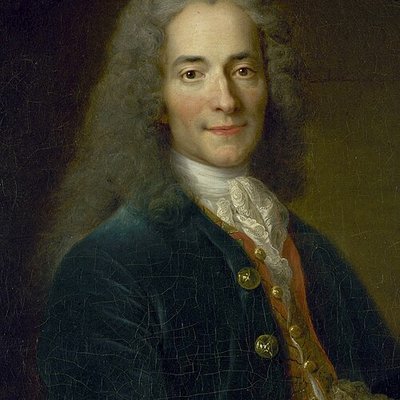
"If there were only one religion in England there would be danger of despotism, if there were two they would cut each other's throats, but there are thirty, and they live in peace and happiness."
"Even in those cities which seem to enjoy the blessings of peace, and where the arts florish, the inhabitants are devoured by envy, cares and anxieties, which are greater plagues than any experienced in a town when it is under siege."
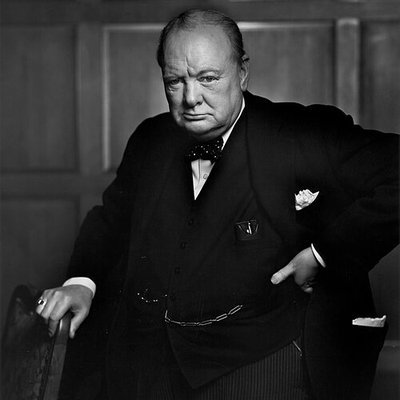
"I see advancing upon all this in hideous onslaught the Nazi war machine, with its clanking, heel-clicking, dandified Prussian officers, its crafty expert agents fresh from the cowing and tying down of a dozen countries. I see also the dull, drilled, docile, brutish masses of the Hun soldiery plodding on like a swarm of crawling locusts. I see the German bombers and fighters in the sky, still smarting from many a British whipping, delighted to find what they believe is an easier and a safer prey."
"It may be said, therefore, that the military opinion of the world is opposed to those people who cry ' Democratize the army!' and it must be remembered that an army is not a field upon which persons with Utopian ideas may exercise their political theories , but a weapon for the defence of the State ."