Belief in God(s)
Belief in God or gods is the acceptance that one or more divine beings exist — beings of extraordinary power, knowledge, or moral authority who play a role in the creation or governance of the world. It is the central claim of the world's major religions and the subject of extensive philosophical inquiry.
Arguments for and against
The philosophical arguments for and against divine existence
The cosmological and fine-tuning arguments suggest that the existence of a contingent, precisely calibrated universe calls for an explanation beyond itself — one that theism offers more parsimoniously than competing accounts.
Cosmological arguments assume that contingency requires external explanation while exempting God from the same requirement; the fine-tuning argument is undermined by selection effects that make any universe we inhabit seem specially suited to us.
The role of religious experience as evidence
The near-universal human experience of transcendence, encounter with the sacred, and felt divine presence constitutes a significant body of first-person evidence that should carry some epistemic weight in assessing theistic claims.
Religious experiences are highly culturally conditioned — people experience the God of their tradition — and neuroscience has identified brain states associated with such experiences, suggesting internal rather than external causes.
Its relationship to morality and ethical foundations
Theistic frameworks provide a grounding for objective moral values that is difficult to replicate without a transcendent standard; the existence of binding moral obligations makes more sense if there is a moral lawgiver.
The Euthyphro dilemma shows that either morality is arbitrary because God commands it, or morality is independent of God; in either case, theism adds nothing necessary to ethics that secular frameworks cannot supply.
The problem of evil and suffering
The existence of suffering is compatible with an omnipotent and benevolent God if free will, soul-making, or purposes opaque to human understanding are operative; the problem of evil does not constitute a decisive disproof of theism.
The scale and distribution of natural suffering — particularly the suffering of sentient beings incapable of moral growth — is very difficult to reconcile with a powerful and loving God, and constitutes strong evidence against classical theism.
What influencers say
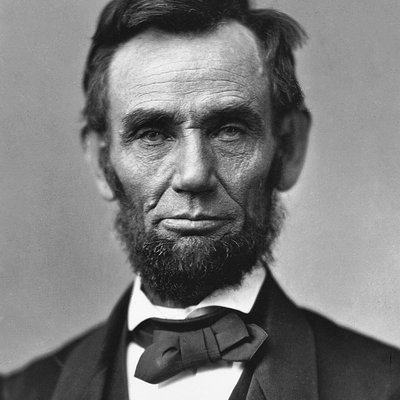
"The will of God prevails. In great contests each party claims to act in accordance with the will of God. Both may be, and one must be, wrong. God cannot be for and against the same thing at the same time."
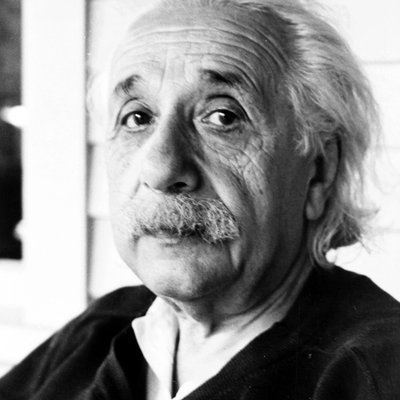
"I believe in Spinoza's God, Who reveals Himself in the lawful harmony of the world, not in a God Who concerns Himself with the fate and the doings of mankind."
"I have repeatedly said that in my opinion the idea of a personal God is a childlike one. You may call me an agnostic, but I do not share the crusading spirit of the professional atheist whose fervor is mostly due to a painful act of liberation from the fetters of religious indoctrination received in youth. I prefer an attitude of humility corresponding to the weakness of our intellectual understanding of nature and of our own being."
"If the believers of the present-day religions would earnestly try to think and act in the spirit of the founders of these religions then no hostility on the basis of religion would exist among the followers of the different faiths. Even the conflicts and the realm of religion would be exposed as insignificant."
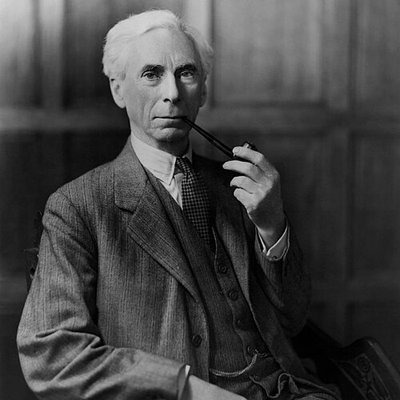
"He asked my religion and I replied 'agnostic'. He asked how to spell it, and remarked with a sigh: 'Well, there are many religions, but I suppose they all worship the same God. This remark kept me cheerful for about a week."
"I should like to believe my people's religion, which was just what I could wish, but alas, it is impossible. I have really no religion, for my God, being a spirit shown merely by reason to exist, his properties utterly unknown, is no help to my life. I have not the parson's comfortable doctrine that every good action has its reward, and every sin is forgiven. My whole religion is this: do every duty, and expect no reward for it, either here or hereafter."
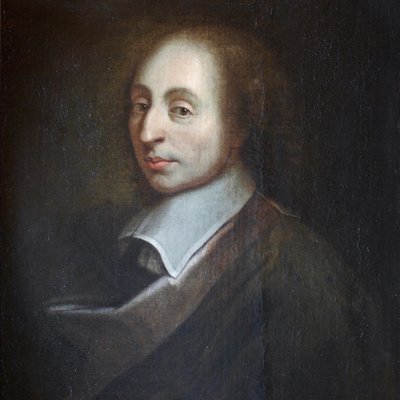
"God only pours out his light into the mind after having subdued the rebellion of the will by an altogether heavenly gentleness which charms and wins it."
"I do not speak here of divine truths ... because they are infinitely superior to nature: God alone can place them in the soul ... I know that he has desired that they should enter from the heart into the mind, and not from the mind into the heart, to humiliate that proud power of reasoning that pretends to the right to be the judge of the things that the will chooses; and to cure this infirm will which is wholly corrupted by its filthy attachments."
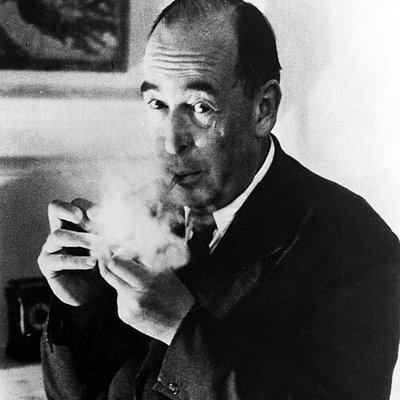
"Looking for God—or Heaven—by exploring space is like reading or seeing all Shakespeare's plays in the hope that you will find Shakespeare as one of the characters or Stratford as one of the places. Shakespeare is in one sense present at every moment in every play."
"Even atheists rebel and express, like Hardy and Housman , their rage against God although (or because) He does not, on their view, exist..."
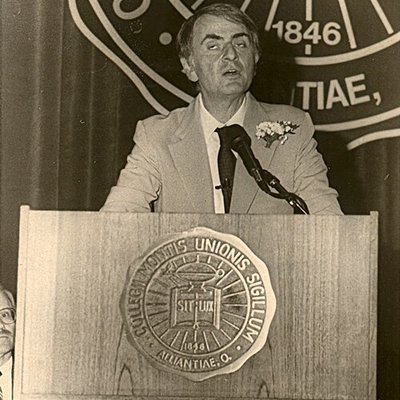
"If a Creator God exists, would He or She or It... prefer a kind of sodden blockhead who worships while understanding nothing? Or would He prefer His votaries to admire the real universe in all its intracacy?"
"But there is a chance that the answers will discomfit a great many bureaucratic and doctrinal religions. The idea of religion as a body of belief, immune to criticism, fixed forever by some founder is, I think, a prescription for the long-term decay of the religion, especially lately."
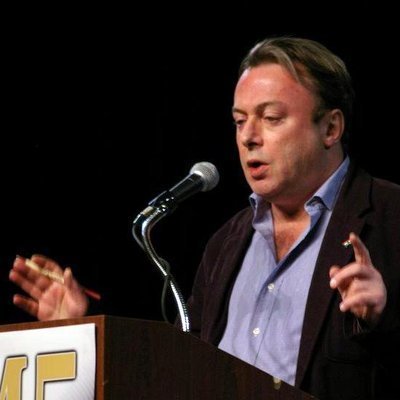
"Well if you reduce religion to social work, so does USAID produce...do all that. Actually, a secular organization, actually rather more convincingly. Most of the great philanthropist of the united states have been atheists...doesn't prove that atheism is correct."
"A double problem arises: There is first the difficulty of, if not the impossibility of demonstrating the existence of any creator or designer at all. I think I say something uncontroversial when I say that no theologian has ever conclusively demonstrated that such a designer can or does or ever has existed. The most you can do, by way of the argument from design, is to infer him or her or it from an apparent harmony in the arrangements - and this was at a time when that was the very best that, so to speak, could be done. But religion goes a little further than this already rather impossible task, and expects us to believe as follows: that the speaker not only can prove the existence of a said entity, but can claim to know this entity's mind - in fact, can claim to know it quite intimately; can claim to know his or her personal wishes; can, in turn, tell you what you may do, in his name - a quite large arrogation of power, you will suddenly notice, is being granted to the speaker here. The speaker can tell you that he knows - he cannot tell you how - but he can tell you that he knows, for example, that heaven hates ham, that god doesn't want you to eat pork products; he can tell you that god has a very very strong view about with whom you may have sexual relations, indeed, how you may have sexual relations with others; he can indicate, perhaps a little less convincingly but no less firmly, that there are certain books or courses of study that you might want to avoid or treat with great suspicion.”"
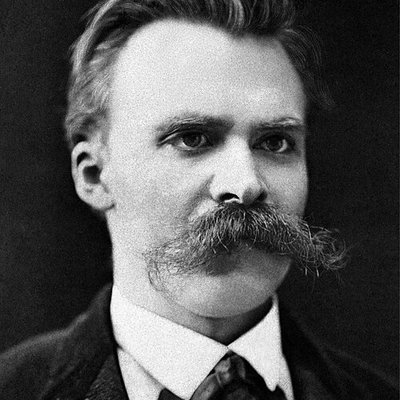
"An art that spoke the truth [...] banished the muses of the arts of seeming; [...] the individuum — with its limits and measure — went under. A twilight of the gods stood near at hand. [...] A new and higher mechanick of existence had come into play."
"God is dead. God remains dead. And we have killed him."
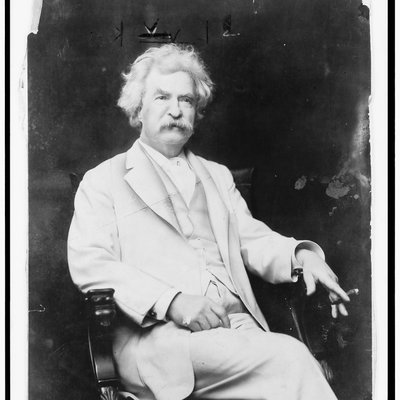
"There is no God, no universe, no human race, no earthly life, no heaven, no hell. It is all a Dream, a grotesque and foolish dream. Nothing exists but you. And You are but a Thought — a vagrant Thought, a useless Thought, a homeless Thought, wandering forlorn among the empty eternities."
"The easy confidence with which I know another man's religion is folly teaches me to suspect that my own is also."
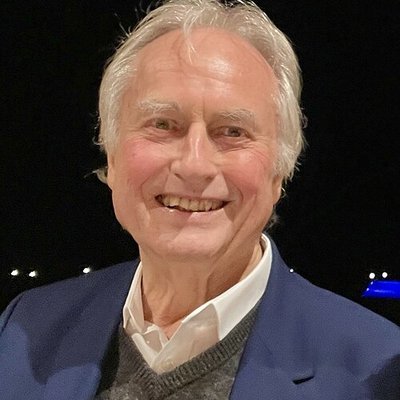
"My last vestige of "hands-off religion" respect disappeared in the smoke and choking dust of September 11, 2001 , followed by the "National Day of Prayer", when prelates and pastors did their tremulous Martin Luther King impersonation and urged people of mutually incompatible faiths to hold hands, united in homage to the very force that caused the problem in the first place."
"Faith is the great cop-out, the great excuse to evade the need to think and evaluate evidence. Faith is belief in spite of, even perhaps because of, the lack of evidence."
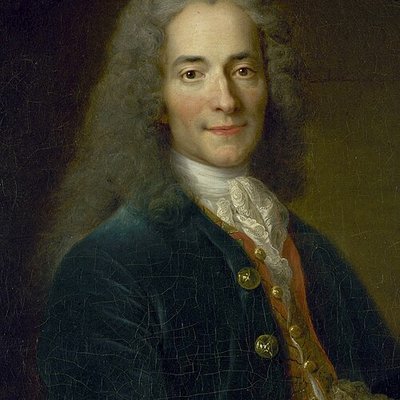
"The institution of religion exists only to keep mankind in order, and to make men merit the goodness of God by their virtue. Everything in a religion which does not tend towards this goal must be considered foreign or dangerous."
"O Truth! pure and sacred virgin, when wilt thou be worthily revered? O Goddess who instructs us, why didst thou put thy palace in a well? When will our learned writers, alike free from bitterness and from flattery, faithfully teach us life?"