Feminism
A range of political, social, and economic movements and ideologies united by the goal of defining and achieving political, economic, personal, and social equality of the sexes. Debate concerns its scope, methods, internal divisions, and relationship to other social justice frameworks.
Arguments for and against
Gender equality in law and institutions
Feminist advocacy has directly driven legal reforms — equal pay legislation, domestic violence law, reproductive rights, anti-discrimination frameworks — that have materially improved women's lives in measurable ways. These gains have benefited entire societies, not just women.
In domains where formal legal equality has been achieved, continued application of a feminist framework may misidentify structural outcomes as ongoing discrimination. Some disparities reflect different preferences and choices rather than systemic inequality requiring legal remedy.
Structural vs. individual explanations of inequality
Aggregate gender disparities in pay, political representation, and safety — persistent across countries and generations — cannot be explained by individual choice alone. Structural barriers including occupational segregation, unpaid care burden, and workplace bias require structural responses.
Feminist frameworks that attribute gender disparities primarily to structural discrimination may discount the role of individual preferences, biological differences in risk tolerance and occupational choice, and the genuine progress made through legal and cultural reform.
Intersectionality and internal diversity
Intersectional feminism recognizes that gender inequality interacts with race, class, disability, and sexuality in ways that produce different experiences. This nuanced analysis produces more effective advocacy by addressing the specific circumstances of the most marginalized.
The proliferation of identity categories within feminist theory can fragment political coalitions and produce competing hierarchies of oppression that make collective action more difficult. Shared experience of gender inequality — the original basis for solidarity — risks being dissolved.
Men and masculinity
Feminist analysis of rigid gender norms benefits men by challenging expectations of emotional suppression, breadwinning burden, and disposability in conflict that contribute to male mental health crises, shorter life expectancy, and social isolation.
Contemporary feminist discourse sometimes frames masculinity itself as problematic rather than distinguishing between harmful norms and legitimate expressions of male identity. This alienates potential allies and contributes to a culture war that impedes practical progress on shared goals.
What influencers say

"If I were a man, I would strenuously object to the assumption that women have any moral or spiritual superiority as a class . This is [...] female chauvinism ."
"When women take their education and their abilities seriously and put them to use, ultimately they have to compete with men. It is better for a woman to compete impersonally in society, as men do, than to compete for dominance in her own home with her husband, compete with her neighbors for empty status, and so smother her son that he cannot compete at all."
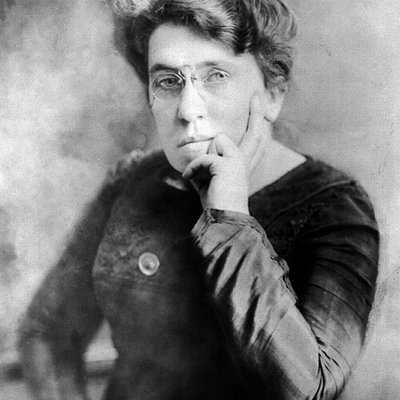
"The right to vote, or equal civil rights, may be good demands, but true emancipation begins neither at the polls nor in courts. It begins in woman's soul."
"It is a conceded fact that woman is being reared as a sex commodity, and yet she is kept in absolute ignorance of the meaning and importance of sex."
"There is no reason whatever to assume that woman, in her climb to emancipation, has been, or will be, helped by the ballot."
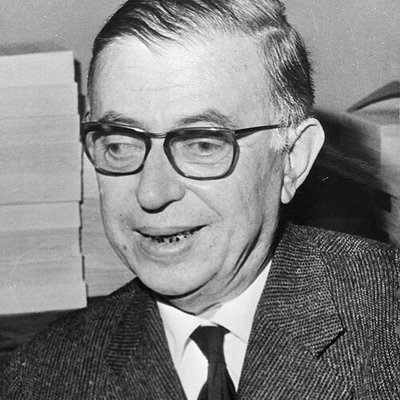
"I know nothing, I am neither woman nor girl; I have been living in a dream and when someone kissed me, it made me want to laugh. Now I am here before you, it seems as though I have just awakened and it is morning."
"I can be twenty women, one hundred, if that's what you want, all women. Ride with me behind you, I weigh nothing, your horse will not feel me. I want to be your whorehouse!"
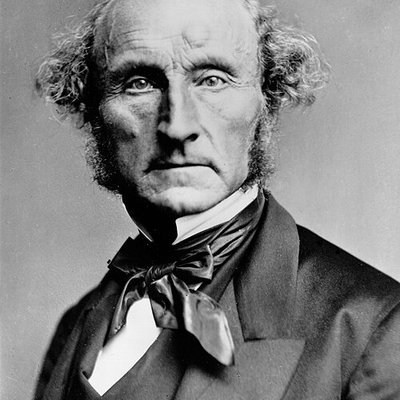
"liberals such as Mill, and later socialists and feminists of different political sympathies, likened women's situation within marriage and their deprivation of civil rights to the state of slavery. As Mill expressed it in The Subjection of Women, a text that was first published in 1861, the year of the outbreak of the American Civil War, 'no slave is a slave to the same lengths, and in so full a sense of the word, as a wife is'."
"Reformers like Mill saw women's oppression as a 'relic of the past...discordant with the future and which must necessarily disappear.'"
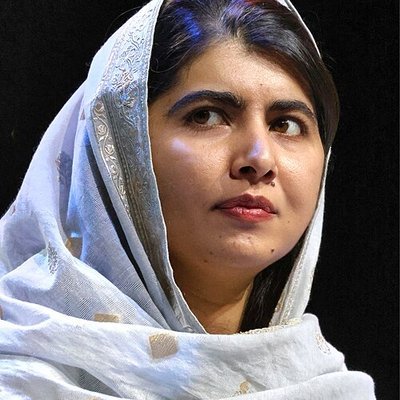
"First of all, my father inspired me...he is a great social activist and women's rights activist...he spoke out. And he spoke for women's rights...that hard situation, he inspired me, because he spoke. And that's what I learned from him."
"Thousands of people have been killed by the terrorists and millions have been injured. I am just one of them. So here I stand, one girl among many. I speak not for myself, but so those without a voice can be heard. Those who have fought for their rights. Their right to live in peace. Their right to be treated with dignity. Their right to equality of opportunity. Their right to be educated."
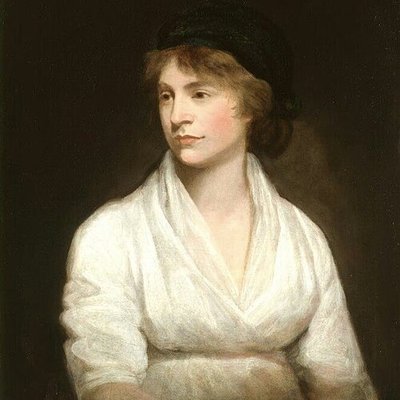
"To be a good mother — a woman must have sense, and that independence of mind which few women possess who are taught to depend entirely on their husbands. Meek wives are, in general, foolish mothers; wanting their children to love them best, and take their part, in secret, against the father, who is held up as a scarecrow."
"Tyrants and sensualists are in the right when they endeavour to keep women in the dark, because the former want only slaves, and the latter a play-thing."

"I speak as a biologist. There aren't many absolutely clear distinctions in biology. Mostly what we have is a spectrum. But the male-female divide is exceptional in biology. It really is a true binary."
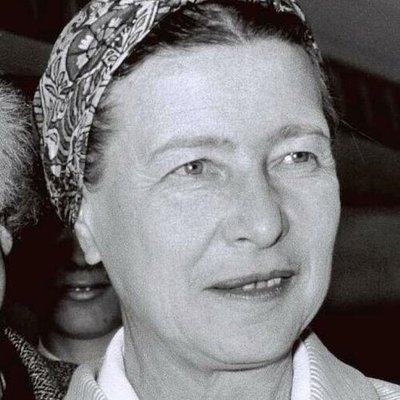
"All agree in recognising the fact that females exist in the human species; today as always they make up about one half of humanity. And yet we are told that femininity is in danger; we are exhorted to be women, remain women, become women. It would appear, then, that every female human being is not necessarily a woman; to be so considered she must share in that mysterious and threatened reality known as femininity."
"No woman should be authorized to stay at home to raise her children. Society should be totally different. Women should not have that choice, precisely because if there is such a choice, too many women will make that one. It is a way of forcing women in a certain direction."
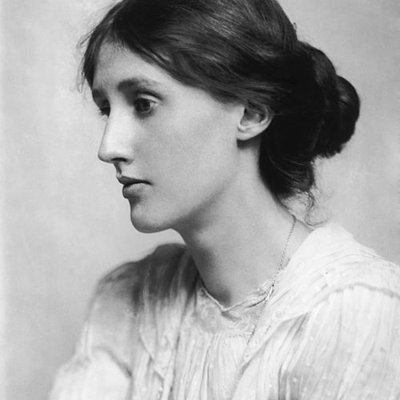
"A woman must have money and a room of her own if she is to write fiction."
"Women have served all these centuries as looking-glasses possessing the magic and delicious power of reflecting the figure of man at twice its natural size."
"The history of men's opposition to women's emancipation is more interesting perhaps than the story of that emancipation itself."